
Blog
Read our latest blog posts of how here to help is supporting people with autism to help them understand and deal with suicide situations.
What is Rejection Sensitive Dysphoria (RSD)? Autism & Emotional Sensitivity
Understanding Rejection Sensitive Dysphoria (RSD) and Autism: Navigating Intense Emotional Sensitivity
Have you ever experienced an emotional reaction to perceived criticism or rejection that felt physically painful, completely overwhelming, and incredibly difficult to shake off? If this sounds familiar, you might be experiencing Rejection Sensitive Dysphoria (RSD).
While RSD is frequently discussed alongside ADHD, it is also a profoundly common, yet under-discussed, experience within the autistic community. At Here to Help, we believe that understanding the intersection of autism and emotional intensity is a crucial step toward self-acceptance and better mental health.
In this blog post, we look at what RSD actually is, why it intersects so deeply with autism, and practical ways to navigate these intense emotional waves.
What is Rejection Sensitive Dysphoria (RSD)?
Rejection Sensitive Dysphoria is a term used to describe an extreme, overwhelming emotional response to the perception of being rejected, criticised, or excluded. The word dysphoria comes from the Greek word meaning “difficult to bear,” which perfectly captures how intense these feelings are.
For someone experiencing RSD, the emotional pain isn’t just a minor disappointment. It can feel like a physical blow, often triggering intense anxiety, deep sadness, or a sudden surge of protective anger.
Crucially, RSD is triggered by the perception of rejection. This means an individual might experience a full emotional spiral over a slightly blunt text message, an ambiguous tone of voice, or a delayed response from a friend, even if no actual rejection was intended.
The Complex Link Between Autism and RSD
Why do autism and RSD so frequently go hand in hand? While research is ongoing, lived experience and qualitative feedback from the neurodivergent community highlight several key reasons:
-
Sensory and Emotional Hyper-reactivity: Autistic individuals often process sensory information intensely, and the same applies to emotions. Emotional responses can be magnified, making feelings of exclusion feel incredibly raw.
-
A History of Social Trauma and Masking: Growing up neurodivergent in a predominantly neurotypical world can lead to a lifetime of feeling misunderstood, left out, or criticised for simply being oneself. Many autistic adults spend years “masking” their traits to fit in, which naturally heightens anxiety about being “found out” or rejected.
-
Communication Differences: Because autistic and neurotypical communication styles differ, misunderstandings are common. An autistic person might overanalyse a social interaction, attempting to decode hidden meanings, which can inadvertently trigger RSD.
Recognising the Symptoms of RSD
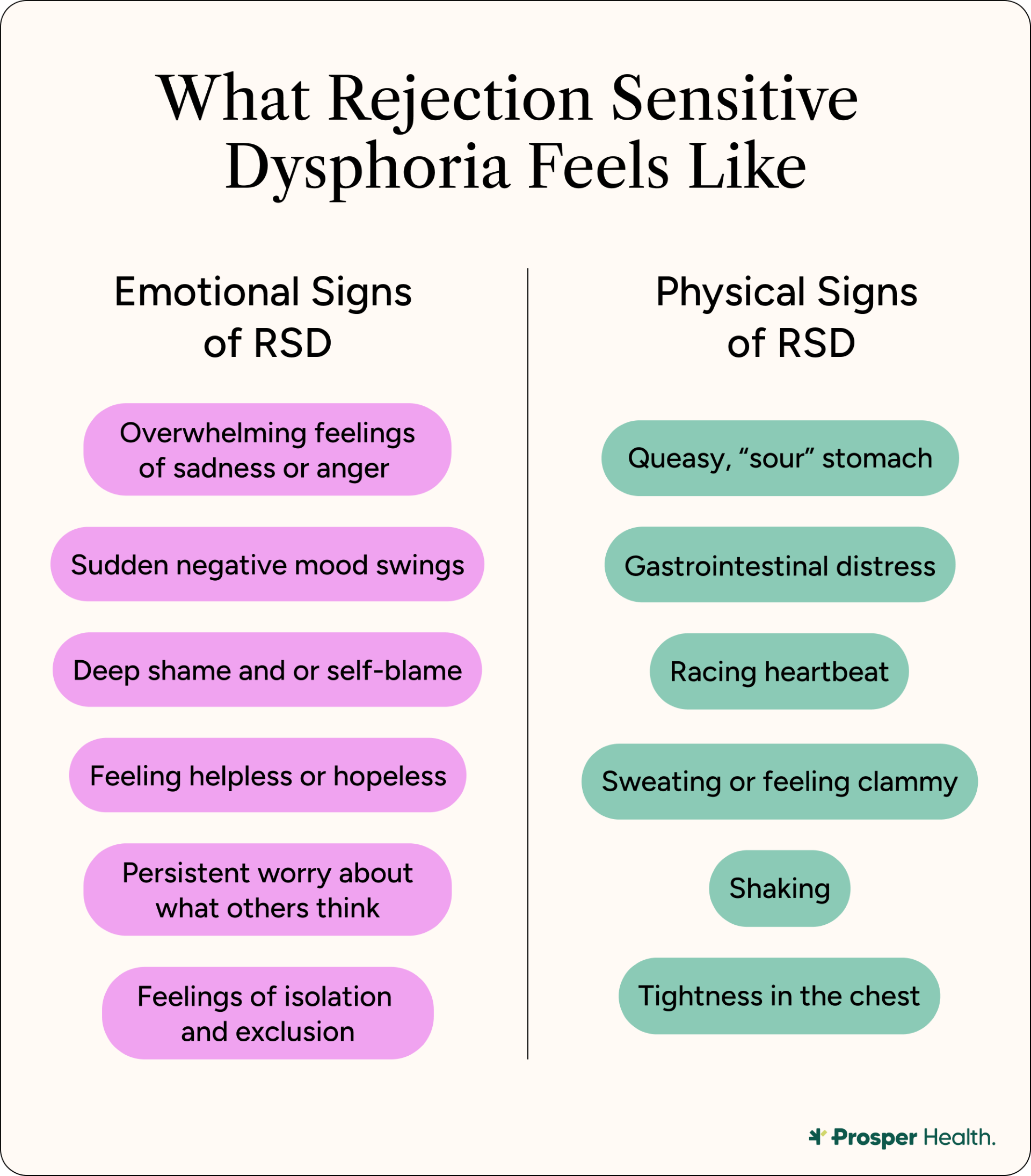
RSD can manifest differently in everyone, but common signs and behaviours include:
-
High Levels of Anxiety: Constantly worrying about whether people like you or if you have upset someone.
-
People-Pleasing: Going above and beyond to cater to others’ needs, often at the expense of your own boundaries, to avoid any chance of disapproval.
-
Social Withdrawal: Avoiding new social situations, job opportunities, or relationships entirely to safeguard yourself from the risk of rejection.
-
Intense Internal Spirals: Experiencing sudden, overwhelming drops in mood or self-esteem following a perceived slight.
Practical Strategies for Managing RSD
Navigating RSD takes time and self-compassion, but there are effective ways to manage the intensity of these emotional waves:
1. Hit the Pause Button (Validate the Emotion)
When an RSD spiral hits, the emotion feels completely true in that exact moment. Acknowledge the pain without judgment. Tell yourself: “I am feeling a massive wave of rejection right now, and it hurts, but this is a physiological response.” Give yourself permission to step away and cool down before responding.
2. Separate Perception from Fact
Once the initial emotional peak has passed, gently look at the situation like an outside observer. Ask yourself: Is there definitive proof of rejection, or is my brain filling in the blanks based on past experiences? What are alternative, neutral explanations for what happened?
3. Build “Neuro-Affirming” Connections
Spending time in safe spaces, such as our Here to Help peer support groups, allows you to connect with people who truly understand neurodivergence. Being around peers who communicate explicitly and accept you for who you are reduces the pressure to mask and lowers the frequency of RSD triggers.
4. Ground Yourself Professionally and Personally
Focus on building a strong, internal sense of self-worth that isn’t dependent on external validation. Engaging in hobbies, special interests, and activities where you feel competent and happy provides an excellent emotional anchor.
You Are Not Alone
If you experience RSD, it does not mean you are overly sensitive or failing. It is a highly real, deeply exhausting aspect of emotional processing that many neurodivergent individuals navigate every day. Recognising it for what it is can be incredibly freeing.
If you are looking for a supportive, non-judgmental community to discuss topics like RSD, autism acceptance, and emotional well-being, we would love to welcome you. Explore our digital resources, toolkits, and local group listings on the Here to Help platform to find out how you can get involved.