

Blog
Read our latest blog posts of how here to help is supporting people with autism to help them understand and deal with suicide situations.
Navigating Autism and Periods: Understanding the PMDD and Sensory Connection
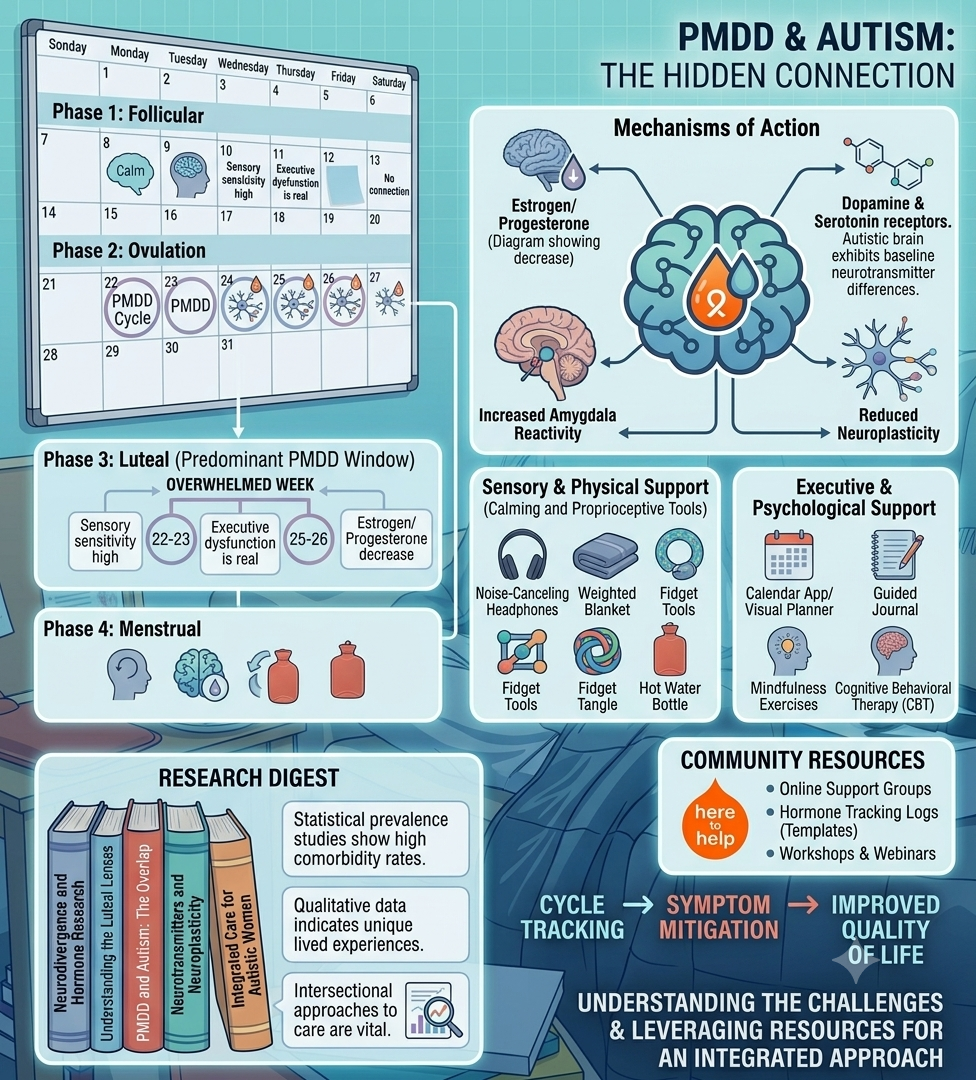
For many people, the monthly menstrual cycle brings a predictable routine of physical cramps or mild mood swings. However, for autistic individuals, periods often introduce an entirely different layer of hidden complexity.
Emerging research and community lived experiences show that autistic individuals are significantly more likely to experience severe premenstrual challenges, including a condition known as Premenstrual Dysphoric Disorder (PMDD).
When you combine hormonal shifts with neurodivergent traits, the week leading up to a period can feel less like standard PMS and more like a total system overload. Here is a look at why periods affect autistic people differently and how to find meaningful support.
Why Do Periods Feel More Intense for Autistic Individuals?
The hormonal fluctuations of the menstrual cycle—specifically the drop in oestrogen and progesterone during the luteal phase (the week or two before a period starts)—directly impact neurotransmitters like serotonin and dopamine. Because the autistic brain already processes sensory information and emotions uniquely, these chemical shifts can amplify everyday challenges.
1. Heightened Sensory Overload
Autistic individuals often experience the world with high sensory sensitivity. During the premenstrual phase, these sensitivities frequently spike.
-
The physical sensations of menstruation—such as the texture of pads, the dampness of external products, or the internal pressure of tampons—can cause profound sensory discomfort.
-
Everyday sounds, bright lights, or certain smells can suddenly become completely intolerable, leading to a much lower threshold for sensory meltdowns or shutdowns.
2. The Overlap with PMDD
While Premenstrual Syndrome (PMS) is common, PMDD is a severe, debilitating health condition rooted in an extreme neurological reaction to natural hormone shifts. Studies suggest that PMDD disproportionately impacts autistic individuals. Symptoms hit hard in the 7 to 10 days before a period and typically disappear shortly after bleeding begins. They include:
-
Severe emotional dysregulation, intense irritability, or sudden crying spells.
-
A significant spike in Rejection Sensitive Dysphoria (RSD), making social interactions or perceived criticism feel incredibly painful.
-
Pronounced executive dysfunction, making it feel almost impossible to organize tasks, manage time, or maintain standard hygiene routines.
-
Deep feelings of hopelessness, severe anxiety, and a marked increase in intrusive thoughts.
3. Interoception Challenges
Interoception is the body’s internal sense that helps us recognize internal cues like hunger, pain, or emotional states. Many autistic individuals experience interoception differences. This can mean either feeling internal cramps and hormonal shifts with agonizing intensity, or struggling to identify why your mood has suddenly dropped, making it incredibly difficult to connect the emotional distress to an upcoming period.
Practical Strategies for Managing Your Cycle
Recognizing that your cycle actively alters your capacity to cope with the environment is the first step toward self-compassion. If you or someone you support struggles with period-related overwhelm, here are practical tools to build into the monthly routine.
Track to Predict
If your cycle is relatively regular, tracking it with an app or a simple visual calendar is invaluable. When you can see that a drop in mood aligns perfectly with your luteal phase, it helps remove the self-blame. You can look at the calendar and recognize: “I am not failing; I am just in my premenstrual week.”
Pivot to Sensory-Friendly Products
If traditional period hygiene causes sensory distress, explore alternatives. Many neurodivergent individuals find relief in switching to alternative options:
-
Period underwear: Eliminates the rustling noise and shifting texture of disposable pads.
-
Menstrual cups or discs: Can reduce the constant sensation of dampness and require less frequent changing throughout the day.
-
Organic cotton products: Often feel much softer against highly sensitive skin.
Reduce External Demands
When you know your difficult week is approaching, intentionally scale back your schedule. If possible, lower the demands placed on your executive functioning. Say no to non-essential social commitments, simplify meal preparation, and give yourself permission to rest.
Create Visual Care Reminders
Because executive dysfunction can make routine tasks feel overwhelming, set phone alarms or place gentle visual checklists on the bathroom mirror. Reminders to change products, hydrate, or take pain relief can take the pressure off your working memory.
Knowing When to Seek Professional Support
If your premenstrual symptoms cause severe disruption to your daily life, relationships, or safety, it is vital to speak with a healthcare provider. Navigating the intersection of autism and hormones is a specialized area of health, and you deserve targeted care.
When booking an appointment with a GP, consider bringing a documented mood and symptom diary covering two or three cycles. This provides clear, concrete evidence to help look into targeted management strategies, which might include specific lifestyle adaptations, hormonal support, or a formal assessment for PMDD.
Our Support at Here to Help If you are navigating the unique intersection of neurodivergence and physical wellbeing, you do not have to figure it out alone. Connect with our local resources and support networks today to find structured, understanding guidance tailored to your needs.